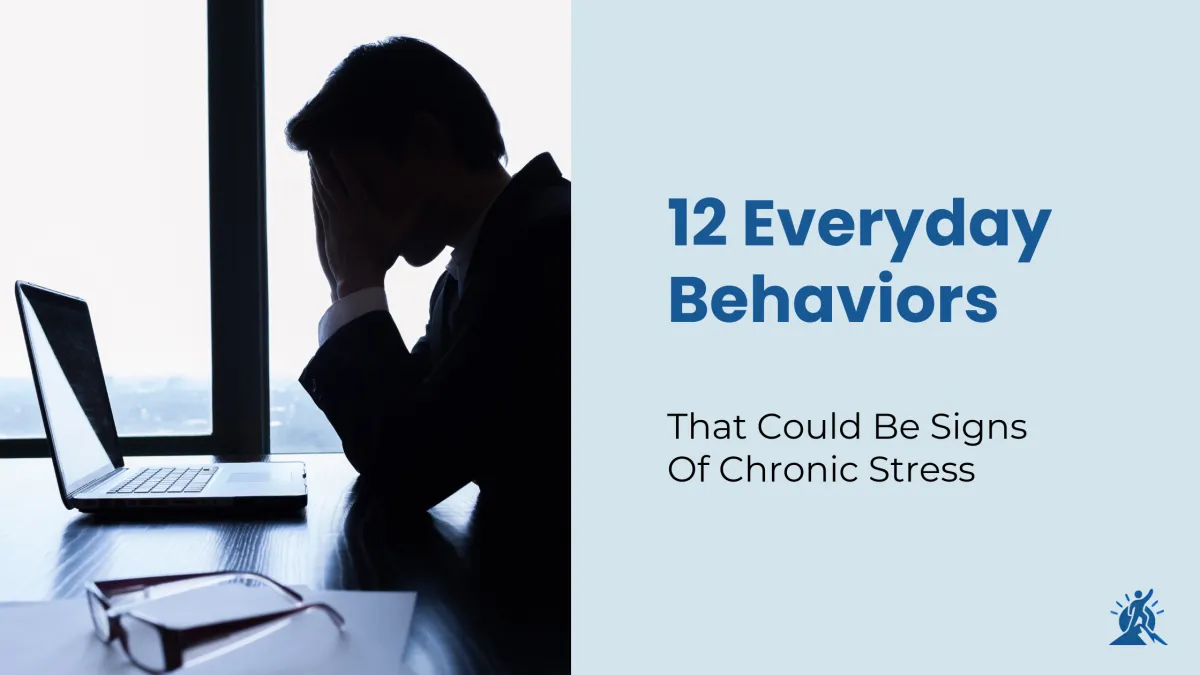
12 Everyday Behaviors That Could Be Signs of Chronic Stress
12 Everyday Behaviors That Could Be Signs of Chronic Stress
Introduction
You've been putting off that email for a week. You've snapped at your partner twice this week over things that don't usually bother you. You've noticed you're reaching for snacks around 3pm even when you're not hungry, and scrolling your phone in bed well past the point of actually wanting to.
None of these things, on their own, seem like much. That's exactly what makes chronic stress so easy to miss — it rarely shows up as one dramatic symptom. More often, it shows up as a scattering of small behavioral shifts that quietly build over weeks or months, easy to explain away individually ("I'm just tired," "I've always been a bit of a procrastinator") but harder to explain once you notice the pattern.
In this article, we'll walk through 12 everyday behaviors that can be signs your stress levels have moved from short-term to chronic, the science behind why stress shows up in these particular ways, and practical, evidence-based steps to help bring things back into balance.
Why Stress Shows Up as Behavior, Not Just Feeling
Stress is often thought of as an emotional experience, but it's fundamentally physiological. When you're stressed, your body releases hormones like cortisol and adrenaline as part of your natural stress response, designed to help you meet an immediate demand. This is meant to be temporary: once perceived danger has passed, your nervous system is designed to relax the body and restore balance.
Under chronic stress, that "restore balance" step doesn't happen properly. The nervous system may struggle to switch off, remaining continuously active in a way that keeps the body in a heightened state even when there's no real threat present. This ongoing physiological activation doesn't just affect mood — it also disrupts brain regions involved in attention, memory, and executive control, which is a large part of why chronic stress so often shows up as behavior: forgetfulness, disorganization, changed eating patterns, and shifts in how we cope, rather than just as a feeling of being "stressed."
The 12 Behaviors
1. Procrastinating More Than Usual
Chronic procrastination isn't simply poor time management — research shows it's closely tied to stress and anxiety, and can become a genuinely debilitating pattern rather than an occasional lapse in discipline. If you're missing deadlines, delaying tasks you'd normally handle easily, or feeling paralysed before starting things, this can be a sign your capacity for self-regulation is being taxed by underlying stress.
2. Snapping at Small Things
Feeling more irritable, snappy, or easily frustrated than usual — where minor annoyances trigger disproportionate emotional reactions — is one of the more socially visible signs of stress. This isn't a character flaw; it reflects a nervous system with a narrower margin for handling additional demands.
3. Craving High-Calorie, Sugary Foods
Stress-related eating has a genuine physiological basis. Cortisol released during stress can increase appetite and drive cravings for calorie-dense "comfort" foods, particularly those high in sugar and fat. Research using controlled stress-induction tasks has consistently found that people with higher cortisol reactivity to stress tend to consume more snacks afterward compared with those with lower reactivity — meaning this isn't simply about willpower, but about a genuine hormonal pull toward certain foods.
4. Losing Interest in Regular Meals
Alongside increased snacking, stress can also suppress interest in structured meals for some people — eating less overall, or losing the routine and appetite cues that usually prompt regular eating. Around 30% of people report a decrease, rather than increase, in food intake during stress, so this behavior can look different from person to person.
5. Increased Reliance on Alcohol, Smoking, or Other Substances
Turning to alcohol, nicotine, or other substances more frequently as a coping mechanism can be a sign that stress has become genuinely difficult to manage on its own. This pattern is worth taking seriously specifically because it tends to compound over time — the substance offers short-term relief while adding a second layer of physiological and psychological strain.
6. Trouble Falling or Staying Asleep
Difficulty falling asleep, staying asleep, or waking still feeling exhausted despite a full night's rest are common and well-documented behavioral and physiological signs of stress. Restless sleep and more vivid or disturbing dreams can also be part of this pattern.
7. Withdrawing From People You'd Normally Spend Time With
Cancelling plans, avoiding calls, or preferring to be alone more than usual can be an easy-to-miss sign of stress, particularly because it can look like simple tiredness rather than a genuine behavioral shift. Chronic stress can contribute to feelings of hopelessness or despondency, which often makes social contact feel like more effort than it's worth, even with people you're close to.
8. Increased Screen Time or Compulsive Scrolling
While less formally studied than some other items on this list, many clinicians describe compulsive phone checking and scrolling as a low-effort distraction behavior that people reach for when stress makes it hard to sit with discomfort or boredom. It tends to offer brief relief without addressing the underlying stress, similar in function to other quick-comfort coping behaviors.
9. Forgetfulness and Trouble Concentrating
Chronic exposure to stress hormones disrupts brain regions responsible for attention, memory, and executive control, which can show up as genuine forgetfulness, poor concentration, and slower thinking — not because you've become less capable, but because your cognitive resources are being diverted elsewhere.
10. Becoming More Disorganized
Alongside procrastination, general disorganization — losing track of tasks, being late more often, or struggling to manage day-to-day responsibilities that used to feel manageable — is a recognized behavioral sign of stress, reflecting reduced capacity for the kind of planning and follow-through that organization requires.
11. Physical Habits Like Jaw Clenching or Fidgeting
Muscle tension, jaw clenching, and restless physical habits are well-documented behavioral and physical responses to stress. These often happen outside conscious awareness — you might only notice a sore jaw or tight shoulders after the fact, rather than the moment the tension began.
12. A Persistent Sense of Being "Behind" or Overwhelmed
A pervasive feeling that you can't quite catch up — even when your actual workload hasn't dramatically changed — can be a behavioral and cognitive sign of chronic stress rather than a genuine mismatch between your responsibilities and your time. This sense of being perpetually behind often drives several of the other behaviors on this list, including procrastination and disorganisation, in a self-reinforcing loop.
Why This Matters If Left Unaddressed
Any one of these behaviors, on its own, is unlikely to be cause for concern. But when several appear together and persist over weeks or months, they're worth paying attention to. Left unaddressed, chronic stress patterns are linked to genuinely negative long-term thinking styles, heightened reactivity to future stress, and poorer judgment, contributing to anxiety, depression, and burnout over time.
The eating-related behaviors in particular carry their own compounding risk: comfort eating functions as a coping mechanism precisely because it offers real short-term relief, but research suggests it doesn't meaningfully reduce underlying stress levels and can contribute to weight gain and further health strain over time — creating a cycle where the coping behavior adds a new stressor rather than resolving the original one.
Practical, Evidence-Based Ways to Respond
The goal isn't to eliminate every one of these behaviors overnight — it's to notice the pattern early and address the underlying stress directly, rather than only managing its symptoms.

Key Takeaways
Chronic stress often shows up as scattered behavioral changes — procrastination, snacking, irritability, withdrawal — rather than one obvious symptom.
These behaviors have a real physiological basis, driven largely by cortisol and its effects on the brain's attention, memory, and appetite-regulation systems.
No single behavior on this list is necessarily a red flag, but a cluster of them appearing together and persisting is worth taking seriously.
Addressing the underlying stress directly tends to be more effective than only managing individual symptoms like the eating or procrastination in isolation.
Practical Action Steps
This week, track which of the 12 behaviors show up for you, even loosely — noticing the pattern is often the first useful step.
Pick one behavior cluster from the table above and try the corresponding suggestion for a week before adding another.
If stress eating is a pattern for you, try pausing before reaching for food and asking whether you're physically hungry or seeking comfort — both are valid, but naming it helps.
Build one small recovery break into your day, even five minutes, before you reach the point of snapping or shutting down.
If these behaviors are persistent, affecting your relationships or work, or accompanied by a sense of hopelessness, consider speaking with a GP or psychologist — these patterns are well understood clinically, and support is genuinely effective.
Conclusion
Stress doesn't always announce itself in obvious ways. Sometimes, it shows up through the small changes we barely notice at first—putting things off, feeling constantly drained, reaching for comfort foods, losing focus, or struggling to switch off at the end of the day. While these behaviors can feel frustrating, they're often signs that your mind and body are asking for support, not evidence that you're failing to cope.
The encouraging news is that stress-related habits can change. By understanding the patterns beneath your behaviors and responding with self-awareness rather than self-criticism, you can begin to build healthier ways of managing life's pressures. Progress rarely happens overnight, but small, consistent actions can gradually improve your energy, focus, and emotional wellbeing.
Most importantly, recognizing that stress may be influencing your daily habits is already a powerful step forward. The more you understand what your mind and body are trying to communicate, the easier it becomes to respond in ways that genuinely support your long-term wellbeing.
Start Building Healthier Stress Habits Today
Life can become overwhelming before we even realize how much stress has taken hold. RECOVER Mental Health was created to help you regain a sense of balance, resilience, and control.
Developed from more than 40 years of clinical experience, RECOVER provides a comprehensive range of practical, professional, evidence-based mental health resources, including guided relaxation, self-assessments, mood tracking, educational masterclasses, and proven strategies to support your emotional wellbeing.
Best of all, RECOVER is one of the most affordable mental health apps available today, making high-quality psychological support accessible for the cost of a cup of coffee a month!
Take the first step towards a healthier, calmer mind. Subscribe to RECOVER Mental Health today and put professional support in the palm of your hand.
RECOVER can be downloaded from Apple Store or Google Play Store by searching for Recover Mental Health or via the RECOVER website.